
How to care for your EMME brush — and why it matters
Your brush is part of your hair routine. Caring for it should be too. A few simple habits keep it clean, protect its materials and help you spot wear.
Why a clean brush matters
Loose hair, natural oils, dust and styling-product residue can collect between pins and bristles. Leave them there and you keep bringing that build-up back into contact with your hair.
Removing it keeps the working surface clear and makes it easier to see whether the bristles, pins or cushion need attention. For wooden tools, careful cleaning also means avoiding unnecessary exposure to water and heat.
01 / Remove trapped hair
After use, lift away loose strands with your fingers or a suitable brush-cleaning tool. Work gently in small sections, especially around dense bristles or a round barrel.
A comb can help lift trapped hair, but avoid levering against the cushion, scraping a coated barrel or pulling hard on pins. Regular, gentle removal is easier than tackling a tightly packed layer later.
A little help from
Brush Wellness Cleaner
A compact, solid-wood tool for lifting loose hair from your brush’s bristles. Keep the EMME Brush Wellness Cleaner beside the tools you use every day so regular care is easy to remember.
Work gently, without scraping coated surfaces or pulling at pins. Removing loose hair is the first step — follow with the cleaning and drying advice below.
ASK ABOUT THE CLEANER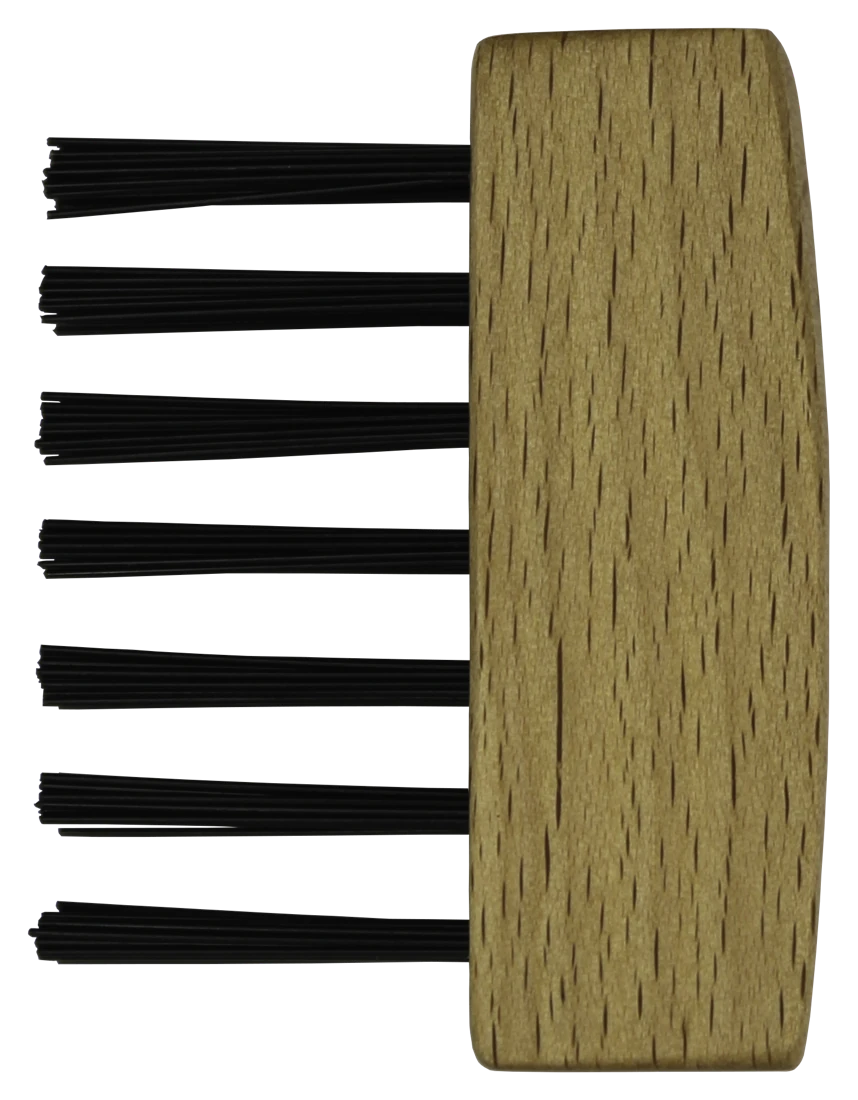
02 / Clean gently
Once the hair is removed, wipe the handle and accessible surfaces with a soft, barely damp cloth. For visible residue between pins or bristles, use a soft cloth or small, soft cleaning brush, working carefully and using as little moisture as possible.
If needed, use a little mild soap on the cloth, then remove the residue with a fresh, barely damp cloth. Keep water out of the cushion and handle joins. Avoid abrasive cleaners, harsh chemicals and vigorous scrubbing.
Check your brush regularly and clean when you see build-up. How often that is will depend on how much you use it and the products in your routine.
03 / Respect the materials
Wooden bodies: EMME’s wooden brushes use natural wood. Do not soak them, leave them submerged or put them in a dishwasher. Wipe away moisture promptly.
Cushions, pins and mixed bristles: clean gently around the base without flooding the cushion or tugging at the bristles. Leave vents clear; do not remove parts unless the product instructions specifically allow it.
Thermal barrels and plated pins: let a brush cool before cleaning. Use a soft touch on coatings and plated surfaces. Avoid abrasive pads, sharp scraping tools and prolonged direct heat.
04 / Dry before storing
After cleaning, blot away excess moisture with a soft towel. Leave the brush in a ventilated place at room temperature until fully dry. A cushioned brush can rest bristles down on a clean towel so moisture can drain away.
Keep it away from radiators and do not use a hot hairdryer to speed up drying. Store it somewhere dry, with room around the bristles, rather than packing it away damp or crushing it at the bottom of a bag.
Know when to replace it
Cleaning is also a useful moment to check for damage. Look for sharp or bent pins, missing protective tips, badly distorted bristles, a split body or a loose handle.
If the brush snags, scratches or has damaged parts that touch your hair or scalp, stop using it and replace it. Let its condition guide you rather than relying on a fixed replacement date.
For salon use
This is an everyday care routine. Salon tools also need cleaning and disinfection between clients using a method compatible with the brush’s materials and the disinfectant manufacturer’s instructions. A quick wipe alone is not a substitute.
If you are unsure which method suits your EMME brush, contact us before using a soaking or chemical treatment.
Small habits, every day
Remove the hair. Clean gently. Dry fully. Store with care. Simple habits help you look after a tool you reach for every day.
Building your routine? Read the brush wardrobe or find your EMME brush.
 58.8994° N | 15.2265°E