
A better fringe day
Choose a round brush to suit your fringe, work in small sections and shape with purpose. A simple guide to softer bends and curtain-fringe movement.

A small section. A clear direction.
A fringe has a big part to play in how a haircut feels. Sometimes it needs a soft bend; sometimes a little lift or a sweep away from the face. Start by deciding what you want it to do, rather than reaching for the smallest brush automatically.
Your fringe length, density, natural texture and the way it grows all influence the result. Ask your stylist to demonstrate on your own hair, particularly if you are working around a strong parting or keeping your natural curls.
01 / Choose the barrel for the section
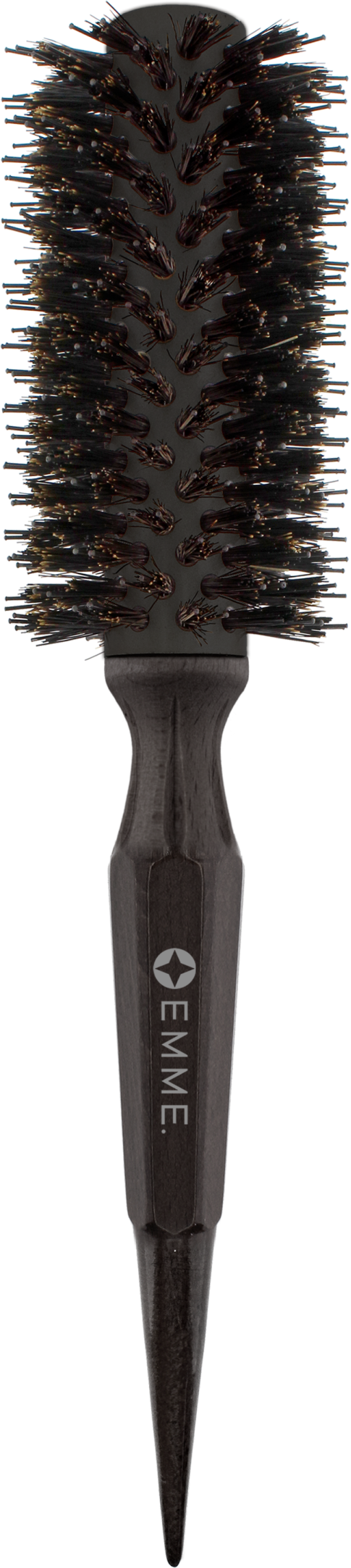
The EMME Pro Styler 14 mm is designed for fringes, shorter sections and detailed work. It gives you a small barrel for precise shaping, but that does not make it the right size for every fringe.
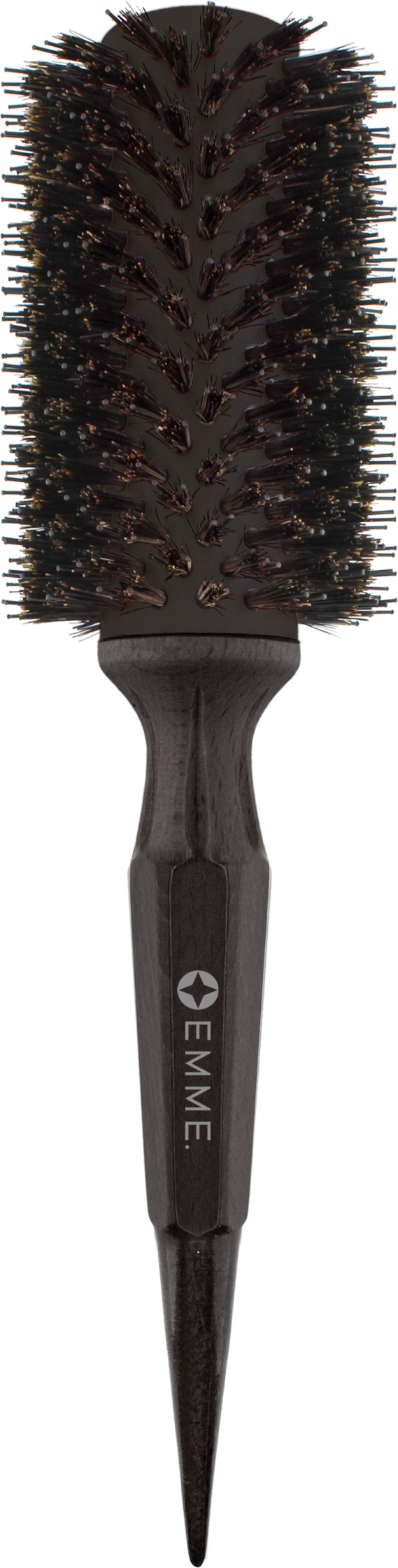
A smaller barrel offers more bend and detail. A larger barrel lends itself to a softer curve, provided the hair is long enough to work around it comfortably. For a longer fringe, compare the 22.2 mm Pro Styler, designed for controlled shape through short to medium lengths.
The range also includes 32 mm for medium lengths and 38 mm for longer lengths and softer volume. These are barrel diameters, not the full width across the bristles. The 22.2 mm brush is labelled 22 mm on pack.
Use the round-brush guide to compare the options, then choose around the section you are styling.
02 / Give your fringe its own space
Clip the surrounding hair away so you can work on the fringe without gathering extra lengths into the brush. Begin with clean, damp hair and divide a fuller fringe into smaller sections you can comfortably control.
Ease out any tangles before shaping. You should be able to guide the brush through the section without pulling hard. If it catches, stop and release the hair gently rather than winding more hair around the barrel.
The Pro Styler combines natural boar and double ionic nylon bristles in a V-shaped arrangement, with a ceramic-coated solid thermal barrel. Its pointed tail is designed for sectioning. Keep the working area clear and take time to position the brush comfortably.
03 / Shape a soft bend
For a curved fringe, support a small section from underneath with the round brush. Guide the airflow from roots towards ends as you move the brush through, turning gently at the ends for the bend you want.
Use your dryer according to its instructions. Keep the nozzle clear of your skin and brush, keep the airflow moving, and avoid holding heat in one place. A fringe sits close to the face, so comfortable handling matters.
Start with a modest curve and assess it before repeating the step. More rotation is not always what the style needs.
04 / Open a curtain fringe
For a curtain fringe, work on each side of the parting separately. Guide each front section outwards and slightly back, away from the face. The aim is a sweep that opens the fringe, rather than turning every section straight under.
Longer sections may suit a larger barrel for softer movement. Compare the size with the length you can wrap comfortably, rather than choosing by the name of the haircut alone.
If you prefer a curly fringe, ask your stylist how to work with its natural pattern. Round-brush shaping changes the curl; you do not have to brush it smooth to make it look considered.
05 / Cool, then leave it alone
Once the section is dry and shaped, use the dryer’s cool setting. Let it cool before arranging it with your fingers. Repeated brushing changes the shape, so finish with a light touch.
If the result is too rounded or sits differently from the finish you wanted, change one thing next time: barrel size, section size or direction. Our blow-dry guide helps you think through those choices.
Keep the brush ready for the next use: remove trapped hair, clean gently and let it dry fully before storing. See our brush-care guide and brush wardrobe for a small, useful everyday routine.
Beautiful tools. Thoughtfully simple.
 58.8994° N | 15.2265°E